


Customer Centered Leadership
Drucker said the purpose of business is to create a customer.
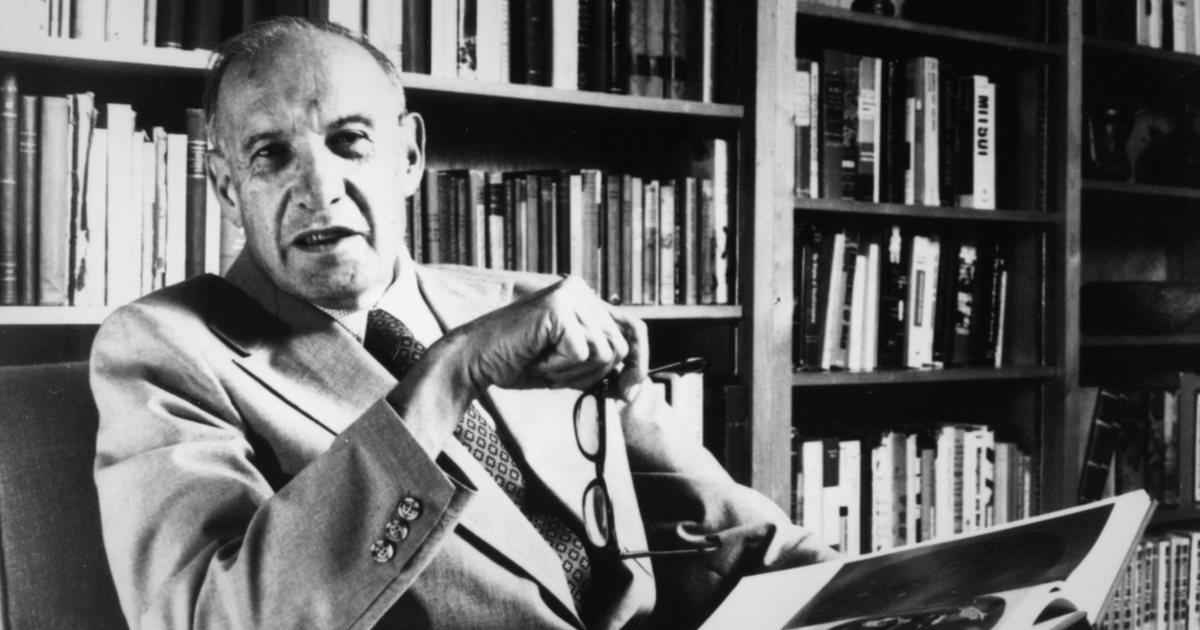
If ever there was one best Business Guru, it would have to be Peter Drucker. His work emerged during the height of the Industrial Age and serves as the foundation of management practice in most businesses today. Just like picking your favorite Beatles song, it’s kind of hard to boil his work down to one statement. But, really I can:
Because the purpose of business is to create a customer, the business enterprise has two–and only two–basic functions: marketing and innovation. Marketing and innovation produce results; all the rest are costs. Marketing is the distinguishing, unique function of the business (The Practice of Management, 1954).
There is one word in this quote that might need to be modernized, but only because we assume Mr. Drucker was naturally influenced by his era, and not fully influenced by the power of Design and the value of customer empathy. To make the most sense in today’s world, I propose we change the word “create” to “discover” as it reverses the direction of selling something to a customer to providing something for a customer. The world will NOT beat a path to your door if you build a better mousetrap (Ralph Waldo Emerson). Customers will flock to your company only if you are solving a problem or fulfilling a need.
Marketing is responsible for discovering customer needs and innovation is responsible for solving them. Hand and glove. Many innovators have already got a customer insight and design a solution that scales. But most have created only a minimum viable product or have no sustainable advantage so quickly burn through early stage growth and stall. In today’s Internet fueled, flat world companies go through this growth stage in a matter of months. In the days of Henry Ford it could take decades (or perhaps just over a century if they don’t get busy quickly at Ford).
The only way out of this problem is to understand your customer better and adapt to the continual pace of change. This requires a new kind of corporate framework. The pace of business technology is moving so fast that people are now able to see the real impact of robots, machine learning, and computing power as good jobs are replaced by automation and artificial intelligence. To function in the high tech, rapid change world companies need to build Human Centered Organizations.
Human Centered Organizations
Industrial Age businesses are built around hierarchy, and there have been plenty of replacement designs proposed (e.g. Holacracy, Heterarchy, etc.). But these distinctions are missing the point and therefore don’t solve the problem. A human centered organization isn’t necessarily a different way to decide or control, it’s designed to enable creativity and collaboration. These are the two essential capabilities underlying the best marketing and innovation functions. For too long we’ve been searching for Purple Squirrels to build Unicorns. Wait, What? We’ve designed companies that need extremely rare people to achieve what is now the expected standard of venture capital investments.
Sorry I can’t help myself, here’s my other favorite Druckerism as it relates to organization design:
No institution can possibly survive if it needs geniuses or supermen to manage it. It must be organized in such a way as to be able to get along under a leadership composed of average human beings.
To be successful in today’s world of business, and achieve the purpose described by Drucker, businesses must enable average human beings to perform at their best. To perform at their best, people need to be well. I’ve covered this principle before so I won’t re-hash it here. But I will suggest a new label for a human-centered organization design for those seeking a simple way to remember all of this: Reciprocity.
Reciprocity is the organizing principle of a human-centered organization. It is built on the seminal economic theory called the Prisoner’s Dilemma. The essence is that cooperation is the better rational choice than selfishness. The problem is people are not always rational and often behave selfishly, so many organizations are designed to control for that. A reciprocal organization empathizes with human failings and offers support and resources to encourage wellness and higher order behavior in three ways:
- Growth Mindset
- Increasing Self Awareness
- Everyday Presence
When organizations are designed to find and support employees in these three (natural) human traits they are far more creative and collaborative. Therefore better able to market and innovate, which is to discover and solve customer problems. The practice of designing, building and managing a reciprocal organization is called Customer Centered Leadership.