


When A Ding Is The Thing
Two carpenters named Bill, a walnut floor, and the harsh sounds of demolition
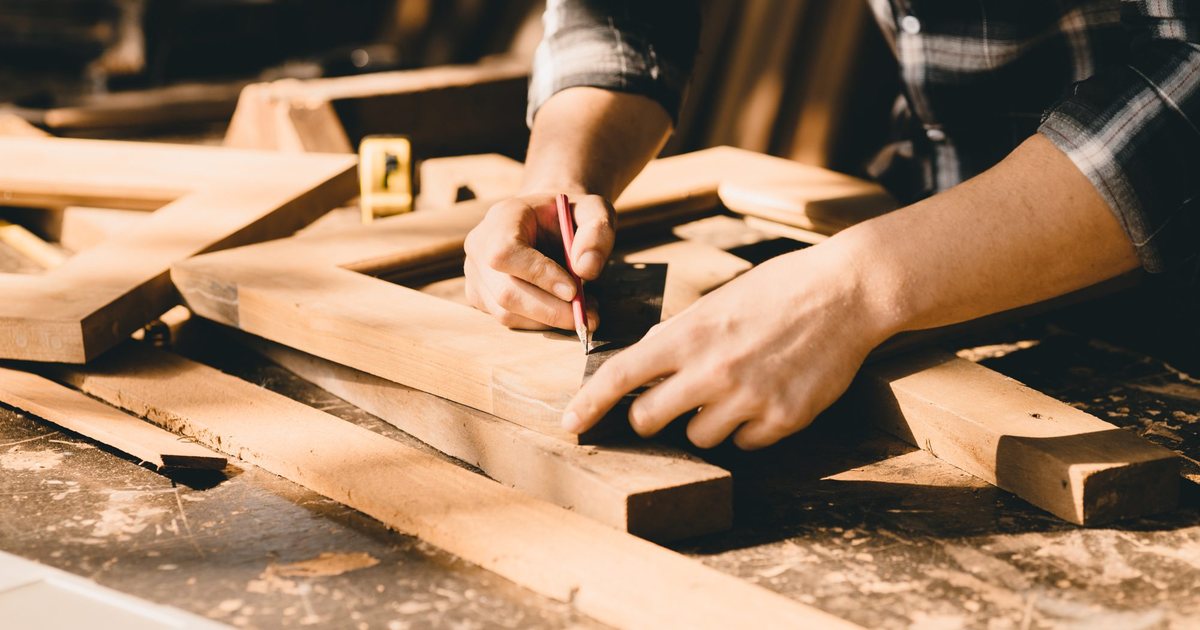
The banging of hammers echoed around the room as I sat on the unfinished walnut floor halfway across a giant family room that overlooked a mature forest through massive patio doors. It was a sunny, crisp autumn day and the trees were just starting to turn. I couldn't imagine a more beautiful setting to practice my emerging carpentry skills.
Laying a floor isn't the most difficult carpentry project, but it helps to know a few tricks of the trade and have access to a few specialized tools. One such tool is a shoe-wedge sort of thing that sits flat on the floor, fits into the groove of a flooring plank, and has a big handle to hold while you whack the wedge with a mallet. A mallet is better than a hammer because it's hard rubber and has better acoustics than steel on steel.
Installing a plank floor starts with a proper layout, to make sure the planks run in the right direction and line up with doors and edges. Once that's figured out, you lay the first plank in the center and work toward the walls in both directions. We were using very long boards to avoid unsightly butt joints, and solid walnut at those lengths is both precious and unruly. Sometimes it took three of us to get the tongue edge of a new board into the groove of the previous one. You'd lay it alongside, tap it with a block, and wiggle it around until the full length connected. We had to be extremely careful with the edges, because breaking or splintering a piece would leave a gouge in the floor, and our crew wasn't the type to use filler to cover imperfections. Damaging a board was a big deal. We needed them at full length, so a cracked one was scrap.
The house belonged to a successful heart surgeon who adored rustic but was also very particular about details. This created a tricky juxtaposition of raw materials and finely honed finishes. My boss Bill was an incredible carpenter who ran a custom home-building business that specialized in historic renovations. There was another guy with us, also named Bill, helping install the floor. As an apprentice I was not doing any of the real carpentry. I inspected and sorted the planks for quality, texture, and color, and provided an extra hand to slide them into place before they were nailed down.
The Other Guy Bill was on our crew as lead carpenter, since My Boss Bill often had other things to manage and wasn't always on site. We had made it about two-thirds of the way across the room and the floor was looking fantastic. My Boss Bill got up to stretch and grab some water. On his way back he scanned the floor and suddenly bent down to touch one spot. His head dropped and he let out a deep sigh. Uh oh.
"Gentlemen, there's a ding. Who left a ding?"
One of the key details of this floor, being rustic and special, was that we were installing it with a face-nailing technique using old-timey square-cut nails. They are not easy to hammer, but if you hit one just right it sinks to the face and you finish it flush with a nail punch. A ding is a small moon-shaped dent you get from hitting the nail too hard and letting the hammer break the surface of the wood. When it's done on purpose you might call it antiquing, but this was not that kind of room. Our customer didn't want antique. He wanted special and as a surgeon, he was expecting precision.
Other Guy Bill looked up sheepishly and owned the error. My Boss Bill got a little red in the face. "How could you leave it there? We can't have it. We can't have a ding on a floor like this. We can't have it." He got kind of stuck on that phrase and walked out on the deck to share it with the trees. A few minutes later he came back in with the clarity that we had only one choice. He chose to step back for the day and said, "I'm leaving you to fix it. Otherwise I might really lose it." He walked out quickly, called for his dog, and we heard his truck pull off down the gravel driveway.
Other Guy Bill sat there a moment and then asked me to get the flat bar and the cat's paw from the truck so we could get this over with.
A flat bar is a long piece of steel with a ninety-degree bend and a beveled edge you can slide under a board to pry it up. A cat's paw is another kind of steel bar with a rounded claw that lets you dig in around a nail head and pry it out. Both tools are only used in demolition, because they tear and break the material you're ripping out. Our beautiful floor, in that beautiful room, on that beautiful day, was about to get wrecked. The ding was about ten boards in, so it was a serious task: shrieking metal, cracking wood, and heavy breathing as you tear them up. I think My Boss Bill had to leave because the sights and sounds of the regression would have been too much for him.
The Other Guy Bill was a very large man, and his length and weight were an asset in the demolition. I think it was cathartic for him to hit, pull, and break the planks as he worked through the emotions of making the mistake and getting caught trying to avoid it. I lugged the damaged flooring out to the dumpster but didn't toss it. I didn't want My Boss Bill to see the expensive pile of waste, and I thought surely we could find a use for this special wood. Later I took it home in my truck, cleaned it up, and trimmed it into smaller pieces. Ultimately that wood became featured insets in a different floor, and some of it became a keepsake jewelry chest.
We finished the floor that afternoon, and the homeowner never knew what we did to get there. The house was featured in a few magazines, and everyone remarks on the gorgeous floor. It makes the room.
I have thought about that afternoon for thirty years, and it comes back to me in every kind of building project I've done since. Three things were true in that room. The standard was held by the people doing the work, not imposed by the customer, who never saw the ding. The fix was not a patch; it was a serious set back involving lost progress and serious repair efforts. The goal was not about perfection, it was about precision and a commitment to an established process. We knew the steps necessary to install each board and when we stuck to it, we achieved excellence. Holding these three truths, as far as I can tell, are the only way anything good gets built.