


Builders, Scalers, and Sustainers
Growth stage personas improve hiring outcomes.
Co-written with Alyssa Kessler, Global Recruiting Manager at the Gates Foundation.
Getting the right people in the right place at the right time can either help or hinder company growth. Many companies learn this the hard way with vanilla hiring practices that produce costly mis-hires who seem good on paper but lack key attributes for the situation at hand. Leveling roles and aligning responsibilities with a career framework is a step in the right direction, but traditional career frameworks don't quite capture the nuances of different role personas needed based on a company's maturity and growth stage. The ask for a "Director" or "Senior Manager" or "Executive" level varies tremendously given the growth stage of the company. As organizations grow, they must transition from building foundational capabilities, to scaling operations, to sustaining long-term growth. This article explores how to navigate these stages beyond what a traditional career framework provides and fills gaps to improve hiring success by applying company stage personas to hiring profiles.
Using a career framework to manage your organization's talent needs
A career framework provides the necessary detail to identify the breadth and depth of competencies required across functions. Career frameworks bring order and alignment to titling, evaluating cross-functional peers, visibility to career development, align roles and pay with the external talent market, and support pay equity. Often called a "leveling exercise," the framework looks past the face value of a title and specifies the underlying scope and impact of responsibilities, usually broadening expectations from functional or technical elements into a more complete role that satisfies work, people, and functional management requirements. Such frameworks are critical building blocks for talent management and improve quality of hire outcomes, but still miss on defining the nuances of the company growth stage and how that affects individual expectations and profile fit.
As organizations progress from building to scaling to sustaining, their leadership needs evolve.
- Building stage: Focus on initiating and establishing core functions.
- Scaling stage: Emphasize expanding and optimizing operations.
- Sustaining stage: Maintain and refine established processes for long-term success.
To illustrate this, let's introduce three profiles: Builder Bob, Scaler Sarah, and Sustainer Sam.
Meet Bob, Sarah, and Sam
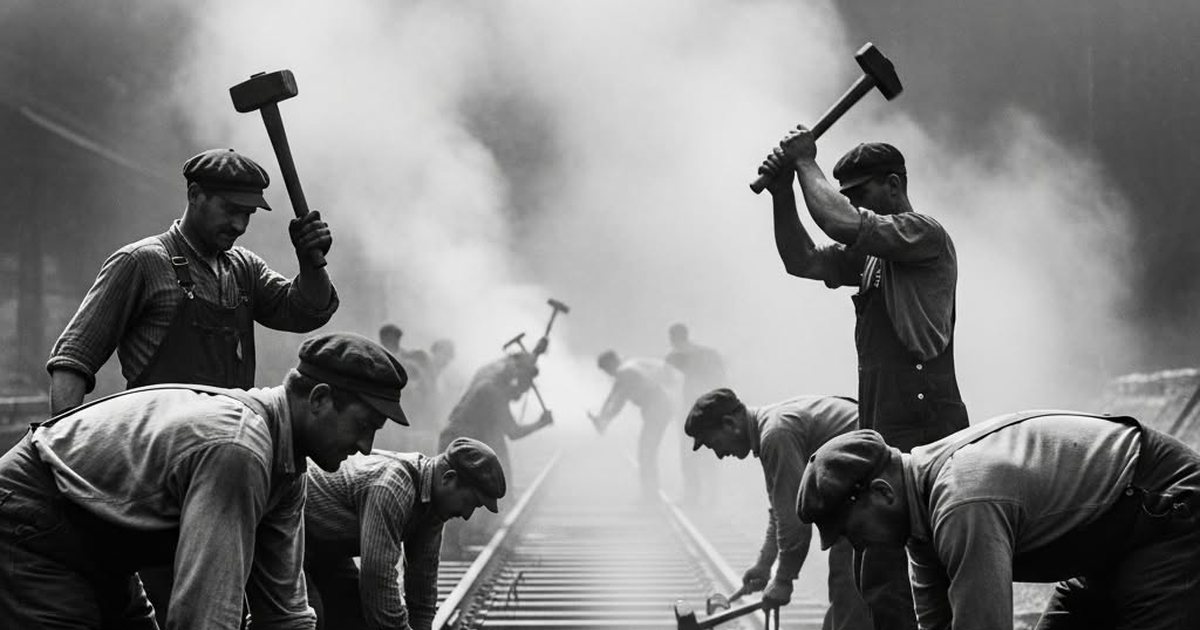
- Builder Bob: An initiator. Think of Bob as the first responder or laying the tracks. Bob thrives in environments where foundational work is needed. He excels in creating new processes, structures, and teams from scratch. Bob is entrepreneurial in nature; he is gifted at making things happen and getting things done.
- Scaler Sarah: If Bob is the first responder, Sarah is the surgeon. She drives the train on the tracks Bob set. Sarah excels in environments where the focus is on expansion and optimization. She has more specific industry and market experience and is skilled at improving efficiency, scaling operations, and managing rapid growth with specific market and industry vision.
- Sustainer Sam: Following the medical analogy, Sam is more like a primary care or general practice leader. Sam excels in maintaining and refining established operations from a foundation of deep functional expertise and operational depth. He focuses on long-term stability and incremental improvements to process, tools, and systems, and on developing next-generation talent. He can lead big teams and navigate complex organizational structures, but delegates most work assignments to specialists and coaches direct reports for broader scale and reach.
Key indicators of growth stage personas
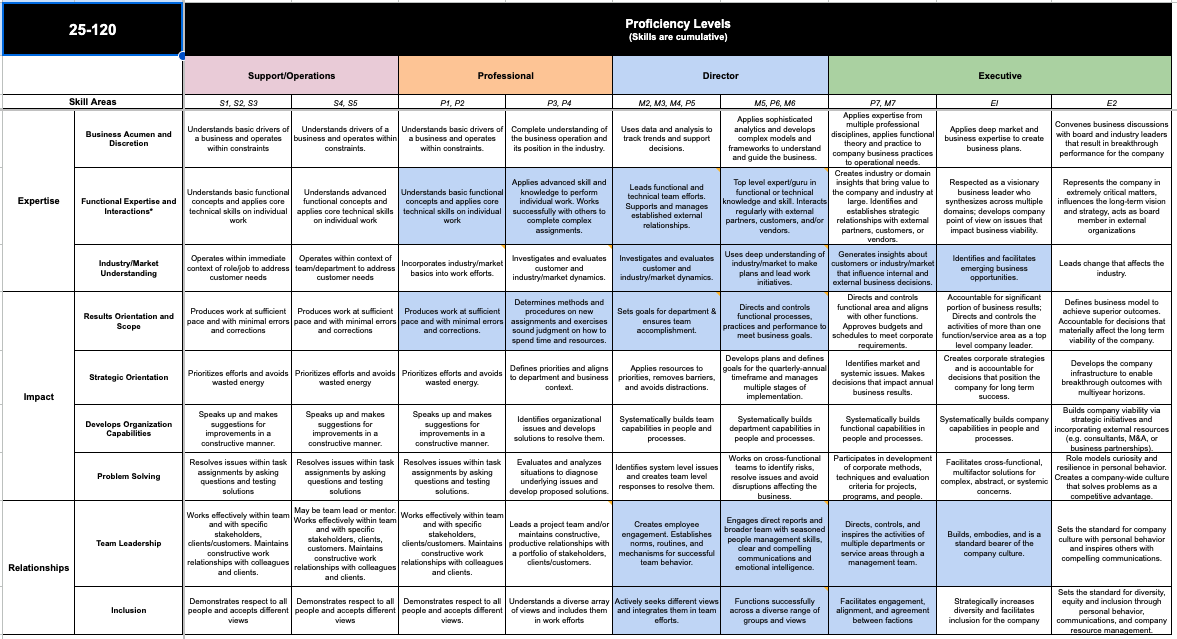
Traditional career frameworks don't take into account that you can have a Builder Director of Product, a Scaler Director of Product, or a Sustainer Director of Product. Same position, same role description, but very different personas and skill sets. Product Director Builder Bob stretches across the career framework from IC to Executive, covering the work of several roles you'd find occupied by different people in a more mature organization. He is asked to take on the tactical, technical, hands-on work of the professional level and stretch up to the vision and strategy of parts of the Executive level. Additionally, Builder Bob has to be in the detailed work as a functional contributor that delivers features and ships product. No job is too small or too large; he is fluid and flexible to stretch and adjust based on the need presented to him. The shaded areas of the career framework below show the range and scope of his skill set.
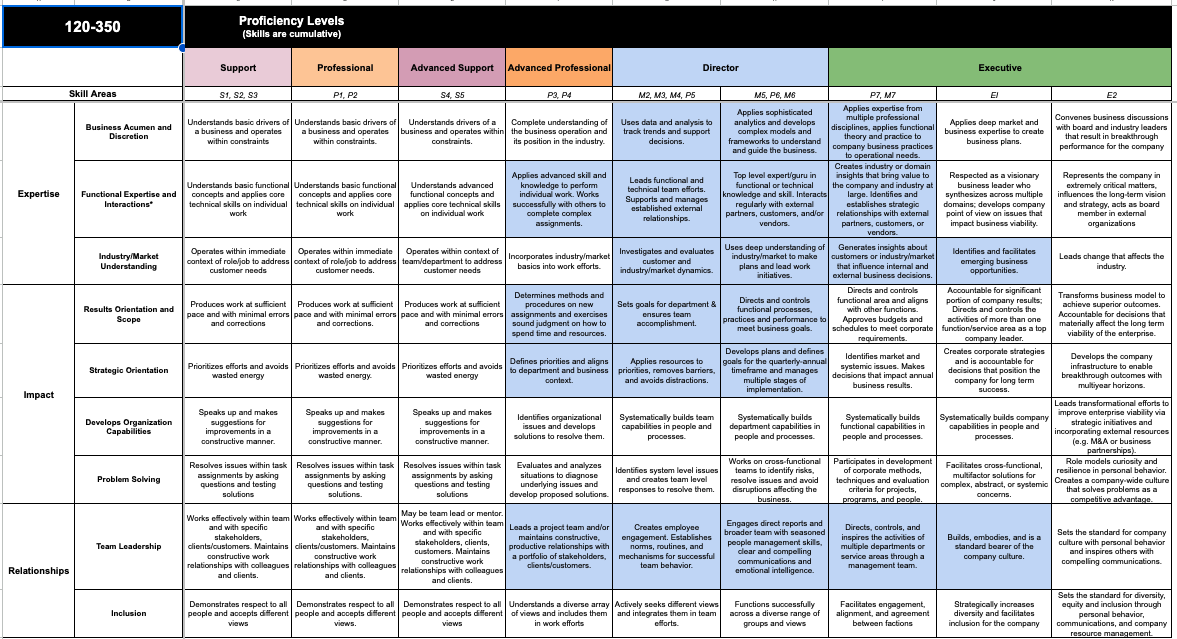
Product Director Scaler Sarah is less tactical in the day-to-day and much more strategically focused on the market growth needs of the product team. Builder Bob did a great job setting up the work cadence and infrastructure to get things moving, and setting the pace and quality expectations of the work as cultural pillars. Scaler Sarah needs to think beyond the day-to-day and get ahead of the current build, to focus on strengthening and extending the competitive moat and commercializing the product in later versions and releases. See below how the shading of her skill set narrows and deepens within the Director band compared to Builder Bob.
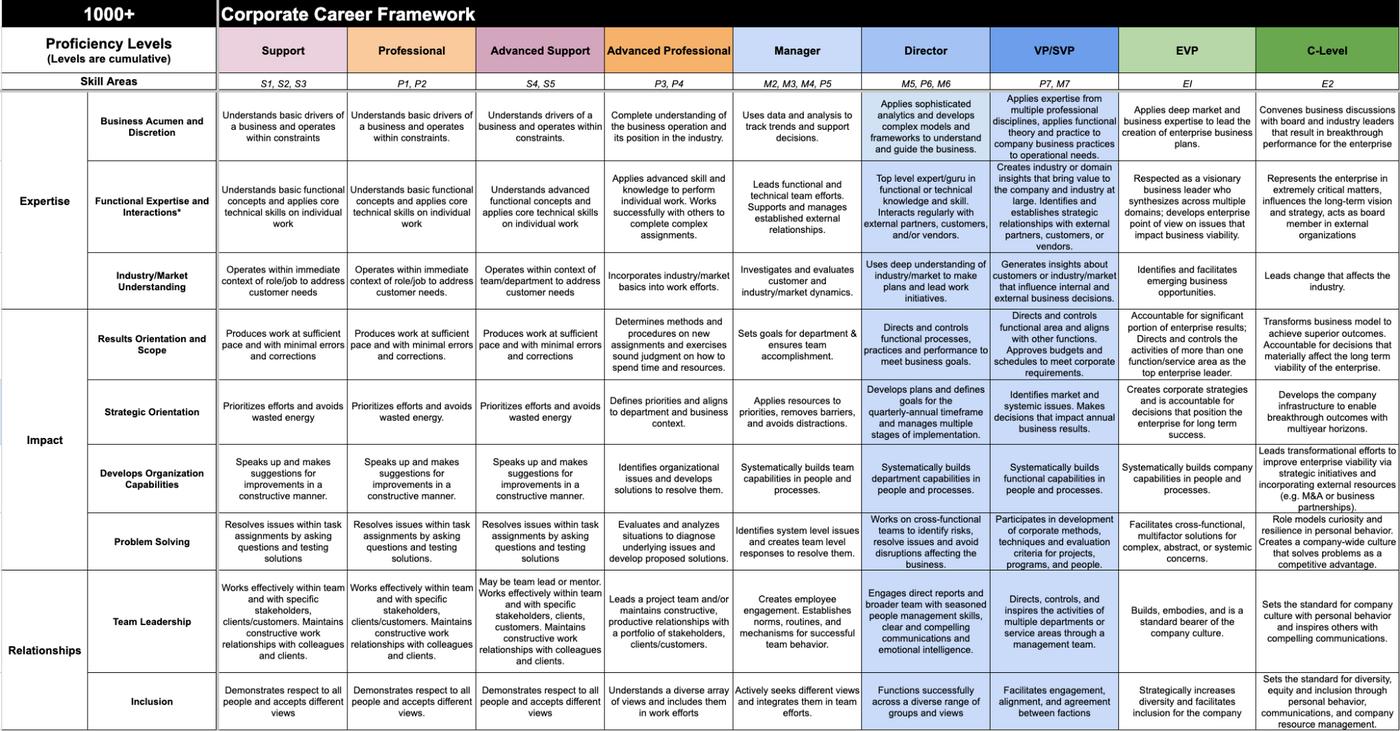
Now let's take a look at Sustainer Sam, who brings a more refined and specialized "management" skill set to a more mature organization. This may occur during the preparation for an IPO or in conjunction with a later-stage financing round, where scaling has slowed and operational efficiencies and lateral extensions are the main drivers of growth. As the organization grows in complexity, adding geographical divisions, new business units, customer types, and product lines, product management becomes entangled in established customer demands, competing internal priorities, and shared platform resources.
These new layers of complexity are necessary for scale, but require specialized roles and cross-functional coordination, and Sam spends most of his time and energy working across departments and functions and through a team of dedicated managers. Timeframes slow as communication to all stakeholders and planning for investments governs speed. Depending on scale, titles settle out into Manager, Director, and Vice President layers, with Sustainer personas who navigate the complexity without feeling boxed in or constrained. Director may now be a supporting leadership role, with a dedicated VP leading several Directors in parallel to cover all of the bases in the function, while participating as a contributor to executive strategy in a compound function that might include engineering or customer support under one C-level leader. Sam may have once operated as a Builder or Scaler, but now prefers to work through others and would be quickly dragged down if required to deliver the hands-on work that Bob and Sarah still enjoy.
Even with the same level and title, builders, scalers, and sustainers exhibit distinct attributes and abilities:
- Builder attributes: Visionary thinking, entrepreneurial spirit, and a proactive approach. Builders are comfortable with ambiguity and can create order from chaos. Abilities: initiating projects, developing new processes, and building teams from the ground up. Builders are often the first responders in crisis situations, capable of rapid problem-solving and decision-making.
- Scaler attributes: Analytical thinking, operational efficiency, and a focus on optimization. Scalers have more acute industry awareness, and thrive in more structured environments where they can enhance and expand existing systems. Abilities: improving processes, managing large teams, and driving growth initiatives. Scalers are skilled at fine-tuning operations, engaging professional teams, and ensuring scalability.
- Sustainer attributes: Setting standards and leading others to achieve mid- to long-term objectives with a focus on meeting business outcomes. Sustainers are excellent talent managers and efficient operators who thrive in established organizations with complex relationships and sophisticated systems. Abilities: leading teams, coaching, talent management, cross-functional relationships, and achieving business outcomes through functional excellence.
Attributes and functional experience
- Builder: Attributes such as creativity, adaptability, and resilience are crucial. Functional experience in startups or early-stage projects is beneficial.
- Scaler: Attributes such as strategic thinking, efficiency, and attention to detail are vital. Functional experience in specific markets or role industry knowledge, managing growth, scaling operations, and optimizing processes is essential.
- Sustainer: Attributes such as stability, consistency, developing talent, and long-term focus are important. Functional experience in maintaining and refining large-scale, established systems is crucial.
Timing is everything
Timing is everything when understanding what type of Builder, Scaler, or Sustainer persona is needed for your team. When hiring a new position or assessing internal talent needs, companies should evaluate the stage, maturity, and makeup of their leaders beyond just Senior Manager to Director to Executive titles. This nuance requires a sophisticated and subtle understanding of your business's maturity, market needs, and long-term strategy.
As you mature, successful talent acquisition considers these types of questions: Do you need a Scaler Director for your product team to build out product differentiation and your competitive moat? Or do you need a Builder Director for your product team to set up the initial scrum infrastructure and cultural tone for the product team? Is your executive team leaning too heavily on the Builder archetype and falling behind on sustainable process and clear strategy? Are you managing someone who needs to grow from a Builder to a Scaler, and how do you coach them to those needs?
Over time, your executive team will start to mix in Scalers and part ways with Builders, and your leadership team will divide into true Executive and Operating sets. This can cause emotional conflict and cultural shifts that should be managed explicitly to avoid distractions and breakdowns among team members. In summary, here are some key areas to consider as you evolve:
- Assess organizational needs. Regularly evaluate the current stage of your organization and adjust leadership roles accordingly. Recognize when it's time to shift focus from building to scaling or sustaining based on team makeup, market needs, stage of growth, and maturity.
- Blend skill sets. Create leadership teams that combine the strengths of both builders and scalers. This blend ensures a balance between innovation and efficiency.
- Provide continuous development. Invest in ongoing training and development programs to help leaders adapt to changing roles and responsibilities as the organization grows.
- Overtitling and underpaying? Particularly in recruiting, it can be easy to over-title a Scaler Director when the needs of the business may still lean Builder. Scalers typically come from larger companies with a been-there, done-that attitude. However, they can be easily overwhelmed by the full spectrum of work that a Builder takes on. Or vice versa, a company can find itself underpaying a Builder when the organization starts to stretch and bring in more Scalers from larger companies to the team.
Conclusion
Building, scaling, and sustaining leaders within an organization goes beyond the confines of traditional career frameworks. Successful companies understand the critical need to align leadership roles with their growth stages and the distinct capabilities required at each phase. Whether it's the visionary, entrepreneurial approach of a builder, the operational efficiency and industry-relevant strategic thinking of a scaler, or the long-term stability focus of a sustainer, recognizing these unique attributes is key to successful leadership and organizational growth.
In today's dynamic business environment, it's essential to continuously assess organizational needs, blend skill sets, and invest in the development of leaders. By doing so, companies can navigate the complexities of growth and maintain a balanced, effective leadership team that drives both immediate and long-term success. The integration of builders, scalers, and sustainers ensures that as businesses evolve, they are equipped with the right talent to initiate, expand, and sustain their operations, ultimately achieving a harmonious and productive organizational structure.