


Dominators, Collaborators, and Peppered Moths
Fitness depends on context, and AI just changed the context
For centuries, possibly longer, hierarchical organizations have been led by dominant players who rise through the ranks in a filtering and selection process. These dominators use command-control tactics to drive value and eliminate barriers, while often sacrificing human aspects for shareholder gains. I know this is not uniform, but most people would agree it's a strong pattern. It's a pattern because it was well adapted to the 20th Century context and produced reliable results.
On a playing field leveled by AI, what behavior patterns will emerge as the new leadership archetype? Will there be only one pattern that works best or many archetypes that serve a diversity of organizational forms and business conditions?
I can see how the Dominator pattern described by Riane Eisler in The Chalice and the Blade could continue to thrive by giving the leader even more control and scale while mitigating the negative human impacts like burnout and layoffs. Hierarchy is not inherently bad; it's just been the best option in a large-scale industrial context.
I can also see how a new type of leader I'll call the Collaborator could emerge as high-trust, small groups replace hierarchical layers. Many early-stage companies are founded with tightly bonded teams who align on the mission but lack the operational skills to run large, complex organizations. They are great at trust, but terrible at scale. AI may enable that archetype to flourish by providing the organizational elements to operate well.
I'm sure we'll see other archetypes emerge based on the many forms of organization that exist in human and non-human systems. Could we see the rise of a Gardener or Orchestrator archetype that organizes around different design principles like sustainability or beauty and still turns a profit?
Without the need for human controls in every aspect of an organization, governance and quality can be designed in novel ways allowing command and control its place, while providing new options that can deliver high performance, predictable results using other mechanisms of motivation and accountability.
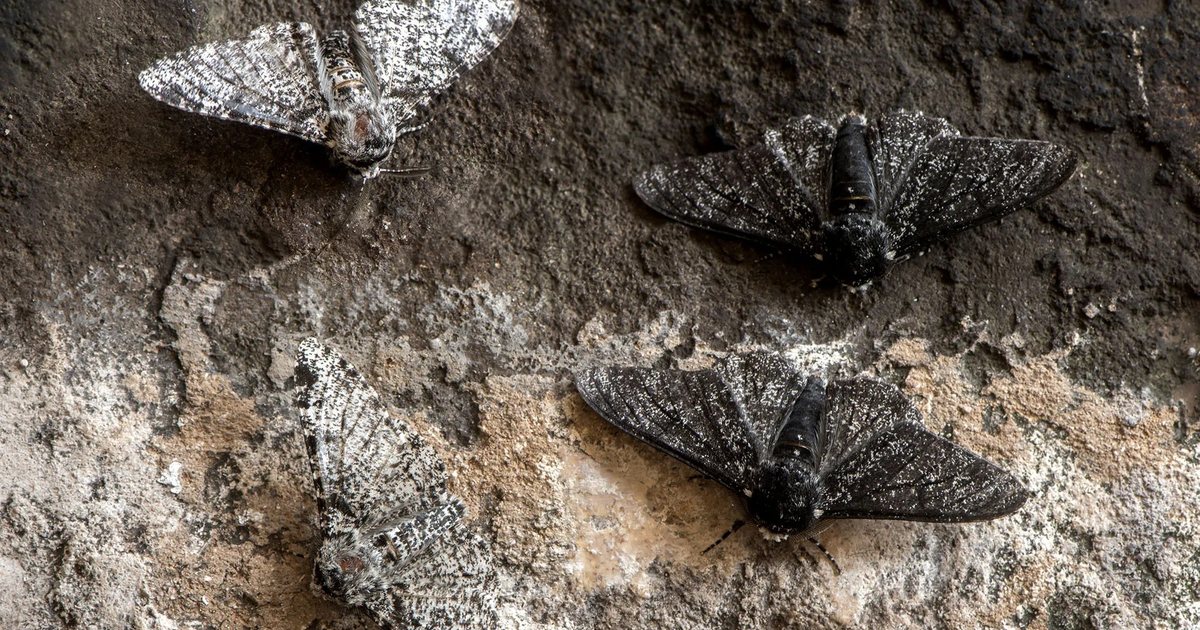
In the wild, plants and animals adapt to their conditions and evolve survival mechanisms that enable them to thrive. This usually happens over very long timeframes, but sometimes it's sudden and dramatic. During the Industrial Revolution, Britain's peppered moth rapidly shifted from pale white to soot black. Factory pollution darkened the tree bark, stripping light moths of their camouflage and leaving dark variants hidden from predators. The pale form became exceedingly rare in just a few decades. After the clean-air reforms of the 1950s the lighter form reappeared, reiterating that fitness depends on context.
Like animals and plants, companies are open systems and function according to their context. They must evolve and adapt to new conditions or they go extinct. The big difference for companies is we choose our structure while plants and animals rely on next generation survivors for their adaptations.
AI is bringing rapid-onset systemic change to companies everywhere. The transformation is less about adopting the new tools and more about adapting to the context these new tools have triggered. Traits that made someone a good leader in 1990 may not be the same traits that underpin success in 2027.