

First Principles for Building Winning Teams
What works for the first 50 hires won't work for the next 500.
There's a common belief in startups that exceptional talent can be spotted during a live interview. Every great founder I've worked with has that ability, and their first hires usually prove them right. But sticking with this approach as a company scales is a trap. There’s a lot more going into a typical hiring process than that all-important in-person meeting.
Early hires often come through a referral from people the founders know. It’s an efficient source because some of the necessary filtering on objective criteria is already done, and the remaining question is whether they get along and align on vision and values. The best research on candidate selection says to gather evidence that a person can do what’s needed first, and reserve the intuitive aspects of fit and values for the last step. As long as someone is doing the technical/functional vetting up front, a live interview ensures values and interests are aligned. When volume goes up and skillsets migrate from what the founder knows well, it’s time to add new steps to the process and it’s essential to get them in the right sequence.
As companies scale and open new locations, most candidates arrive as strangers, meaning the referral that used to pre-qualify their skills is missing. Roles get more specialized and span more levels, and founders can no longer judge an ML researcher's depth or a controller's rigor during a “should we work together” conversation. Often hiring managers may never work with the person they hire, but they are placed as the final judge to ensure accountability, creating new gaps in understanding. Quality of hire, once obvious within a week to a small group, now takes months to observe in a larger organization. Google and Amazon responded to this challenge by converting the founders' judgment into systems (Hiring committees at Google, Bar Raisers at Amazon). We navigated the same shift at Hulu as we grew from under 100 people to more than 1,000 in four years. Our job was to make the original What Defines Hulu manifesto scale so 20 recruiters and hundreds of interviewers could apply it without the CEO being there in person. The original standard worked very well in the early stage, but as we evolved and grew, we had to rewrite it. We asked new hire cohorts to write and produce a “What Defines Hulu, Now” video as an onboarding assignment and present it back to the company at an All Hands.
Exceptional changes with each growth stage
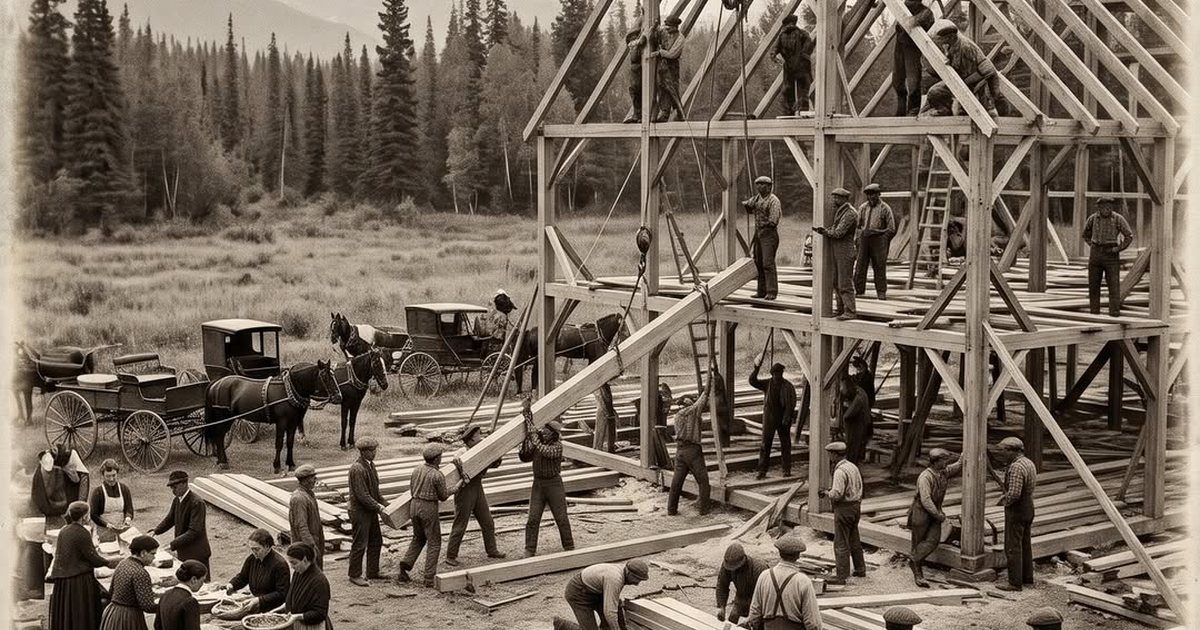
Alyssa Kessler and I explored this in our blog post Builders, Scalers, and Sustainers. Companies move from building, to scaling, to sustaining, and each stage needs a different kind of talent and leadership, even in the same role with the same title. Builders lay the track. Scalers drive the trains. Sustainers keep lots of trains running on time to many destinations.
A Builder Director and a Scaler Director share a title and a job description, but they are very different profiles. A company tripling in size is crossing from building to scaling. The first 50 are mostly builders. Many of the next 500 won't be, and what looked exceptional in the early phase might be disruptive or counter-productive in the next phase. But not always! That’s why each role needs a unique profile description that details the skills, attributes, and context of the role. Without context, either profile might work and it turns out to be a 50-50 hiring bet, which is not great odds.
Follow the evidence
Intuitive judgment in a live meeting is essential to good hiring. Research by Murray Barrick and his colleagues found that first impressions track real traits, like emotional stability and conscientiousness, so a skilled recruiter's first read carries real signal during a hiring screen. The problem is that first impressions carry forward. Candidates who made a good impression in the opening minutes went on to get higher ratings and more offers, even in tightly structured interviews, and it showed most in how interviewers scored their first few answers. Feeling sure about a candidate doesn’t make you right, either. In a study by Jason Dana, Robyn Dawes, and Nathanial Peterson, people predicting students’ grades were just as confident after interviews in which the students gave random answers, and the interviews made their predictions less accurate than the students’ records alone.
The largest recent re-analysis of selection research, by Paul Sackett and colleagues in 2022, found that unstructured interviews predict job performance with a validity of about 0.19. Structured interviews come in at about 0.42, the highest of any method they studied. Even so, the best method explains less than a fifth of the difference in how people perform, which leaves plenty of room for expensive mis-hires.
According to Daniel Kahneman, expert intuition is trustworthy in environments that are regular and give immediate feedback, like chess or firefighting. Hiring is neither. We rarely learn whether a hire worked successfully beyond 6 months, and we never learn about the people we passed on. His fix, which began with redesigning interviews for the Israeli army in the 1950s, was to put intuition at the end of the hiring process, not the beginning. Decades later he formalized it, with Olivier Sibony and Dan Lovallo, as the Mediating Assessments Protocol: break the decision into separate assessments, score each one independently, review them one at a time, and only then make the overall call. In Kahneman's words, the point is to delay intuition, not eliminate it.
That's what founders do naturally with their first 50, and what has to be engineered for the next 500.
AI makes good things better, and bad things worse
We have assessment tools today I’ve been dreaming about for years. Used well, they make structure cheap and assessment way more accurate. Used badly, they put bad signals on an assembly line and the damage adds up quickly.
The failures are well known at this point and most people have naturally shied away from them. HireVue scored candidates' facial expressions until it dropped the feature in 2020. Amazon trained a resume screener on ten years of past hires and introduced unacceptable negative bias. Both failed because they aimed at having AI make the judgment in hiring decisions.
The successes point to a better application of the technology. In a field experiment with about 70,000 applicants, economists Brian Jabarian and Luca Henkel randomly assigned some to AI voice interviewers and some to human recruiters. Humans made every hiring decision, but candidates interviewed by the AI were 12% more likely to get offers, 18% more likely to start, and more likely to stay. The reason wasn't the AI's judgment; it was better consistency in the process. The AI asked more structured questions while still responding to each person, so the humans deciding had better evidence to work with in their decision making. When given the choice, 78% of applicants picked the AI.
Kill the resume (use a portfolio instead)
In 1482, Leonardo da Vinci wrote to the future Duke of Milan asking for work. He didn't list where he had trained or who he had worked for. He wrote down that he could make portable bridges, siege machines, cannon, and sculpture in marble and bronze. He even sent along a silver lyre he had made himself as a physical example of his output. Somewhere in the five centuries since, the resume lost that purpose and became a record of where we've been and what jobs we held. There is a signal to be gained based on employer and school reputations. Titles and responsibilities demonstrate a progression. Numbers and results are a form of evidence. But as they always state in investment fine print, “past performance does not guarantee future results.” It’s a better principle to evaluate evidence first, then layer on context to understand other attributes surrounding the work.
I've argued for years that we should kill the annual performance review. Not because feedback doesn't matter, but because a once-a-year look backward is the wrong instrument. The resume is the same instrument applied to hiring. AI has broken it almost completely because again, we’re misapplying the technology. It’s amplifying a bad signal into a massive wall of noise. Candidates use AI to write resumes; employers use AI to read them. When they are written well, they match perfectly and all of the historical meta-signals are stripped out. Everything looks the same so it’s impossible to stand out.
Instead of an optimized resume, we should be asking for a portfolio of work samples with backstories that act like a museum exhibit. Work artifacts that tell a story within a context. Instead of an application, we should conduct a high-fidelity hiring dialogue and use AI to make it possible. Each person should build a portfolio and work with a chat agent to develop the stories around it. That portfolio could be shared with the hiring company and their agents could peruse the portfolio and ask questions about it. It’s a lot more data but presented in a natural format that leads to curiosity and exploration instead of optimization into tiny boxes. The only reason applications have tiny boxes is because humans have always had to read them and we can’t consume that much information efficiently. AI changes the game completely and allows the portfolio to live long before an interview starts and continuously after a job begins. It becomes the living record of our professional identity. I’ll admit it sounds a little scary, but it sure beats flooding the internet with customized letters and 1-page resumes.
The company has to go first. It publishes the expectation framework for the role that defines what great looks like at three months, six months, and a year. The candidate knows exactly what they're being measured against, and can decide whether they want to pursue it.
- The candidate curates an exhibit. Instead of a list of employers, they bring a small collection of what they've made, chosen for what this role needs, each piece with its backstory: the problem, the constraints, the choices, what happened. A museum exhibit, not a filing cabinet. AI does the heavy lifting, pulling from the person's actual work and matching it to the company's expectation framework, while the person tells the story in their own voice. Recent work counts most. What you're making now is better evidence than what you made a decade ago.
- AI asks the consistent follow-ups. Every candidate gets the same depth of inquiry, the controlled variance that worked in the Jabarian and Henkel study.
- Humans decide. Judging how someone will work inside this team, closing a candidate, owning the decision, require human intuition and judgment once it’s clear the person has the skills to do the work.
- Longitudinal consistency. Everything defined and gathered in the interview process becomes the onboarding plan, the guide for reference questions, and the first map of that person's growth. The hiring dialogue becomes the first chapter of a career dialogue.
The exhibit shows what someone has made and can make. There are concerns about how much time a person should invest in case studies and performance assessments, but with AI-enabled tools and a hosted “sandbox” there can still be “what can you make of this?” challenges that aspiring candidates complete. It doesn’t take much more time than optimizing a resume. But it does show the human elements of making something new.
It’s also critical to get the backstory (often how a structured interview question works). How did they work with the people beside them? Who did they pull in, what did they argue about, what did they change when it went wrong? Using an AI agent to pull the story out is a much better candidate experience. It’s more like structured reflection than a hot-seat “gotcha” question.
Voice will be the interface that makes this possible. People explain their work far more richly when they talk than when they type, and the technology to capture, structure, and carry that context across conversations now exists.
Quality of hire starts before the first interview
Here's the question that separates a talent system from a hiring process: how would you know if you hired well?
Most companies can't answer it. They measure time to fill, cost per hire, and offer acceptance. Those are speed and efficiency metrics. They tell you nothing about whether the person you hired turned out to be a good fit or a mistake. If you never close that loop, your interviewers never get the feedback that would make their intuition worth trusting.
Quality of hire forces you to write down the expectations for the role before you hire for it. More than a job description, it’s the full picture of the skills, attributes, outputs and context of the role. It establishes milestones at three months, six months, and a year. All assessment of candidates and incumbents measures against that. The interview loop tests for it. The references are asked about it. Onboarding is built around it. Performance conversations coach with it. Of course expectations and milestones can’t be too rigid, but even that aspect can be built into the job profile. If the role is constantly evolving, then that should be stated as an expectation of the role. It will be attractive to different people.
Hire for the team
Teams need individuals to play a position, and each position has specific skills and attributes. Defense is not the same as offense in sports. Kickers are different than passers or blockers. But teams must also fit together and hiring must ensure that happens. When Google studied 180 of its own teams in Project Aristotle, it went looking for the perfect mix of people and didn't find it. Who was on a team mattered less than how its members worked together, with psychological safety at the top of the list. Anita Woolley's research at Carnegie Mellon and MIT found that groups have a measurable collective intelligence, and it barely tracks the IQ of their smartest member. Instead, it tracks how perceptive members are about each other and how evenly they share the conversation.
Hiring isn't only answering, "Is this person exceptional?" It's "What will this team be like with this person in it?" That's why the backstory matters as much as the artifact. Attributes are more subjective, so tests may be warranted. Some aspects of personality and values are reliable enough to give evidence to behaviors. But the real key is interpersonal skills, not personality traits. The best leadership teams blend builders and scalers, balancing innovation with efficiency. Working in concert with others requires observable and demonstrable social, communication, and self-management skills. Good interview processes assess them as rigorously as they assess technical competence.
Intuition gets the last vote
The care and intuition expressed by founders when they select their initial team is a standard worth scaling. The time spent getting to know who people are and what they can do pays back exponentially. But intuition always goes last or it skews the results. Scale requires better filters than a close colleague’s recommendation.
At Hulu, our product standard was "pixel perfect," and our CEO asked us to meet unreasonably high expectations. We held hiring to the same bar and hired fewer than 1% of applicants. 85% of the people we made offers to said yes, and only 4% of our people left voluntarily when the industry average was 9.1%. We also set a goal that every candidate should leave better from the experience, hired or not, because every one of them was a potential customer.
That's what a talent leader adds to great founders. Not a magic talent whisperer. A system that lets their judgment reach the hundreds of hires they will never personally make.
Sources
- Barrick, Swider & Stewart (2010), Initial Evaluations in the Interview, Journal of Applied Psychology
- Barrick et al. (2011), Candidate characteristics driving initial impressions during rapport building (summary)
- Swider, Barrick & Harris (2016), Initial Impressions and Structured Interview Outcomes
- Initial impressions in assessment centers and job performance
- Dana, Dawes & Peterson (2013), Belief in the unstructured interview: The persistence of an illusion
- Sackett, Zhang, Berry & Lievens (2022), Revisiting meta-analytic estimates of validity in personnel selection (SIOP summary)
- HireVue discontinues facial analysis screening (SHRM, 2021)
- Amazon scraps secret AI recruiting tool that showed bias against women (Reuters, 2018)
- Daniel Kahneman, Thinking, Fast and Slow (2011), and Kahneman & Klein, "Conditions for Intuitive Expertise: A Failure to Disagree," American Psychologist (2009).
- Jabarian & Henkel, Voice AI in Firms: A Natural Field Experiment on Automated Job Interviews (2026)
- Leonardo da Vinci's 1482 letter to Ludovico Sforza (Medievalists.net); the silver lyre is noted in io9/Gizmodo's coverage
- Kahneman, Lovallo & Sibony, A Structured Approach to Strategic Decisions (MIT Sloan Management Review, 2019)
- Kahneman on delaying intuition (Associations Now)
- Google's Project Aristotle (summary)
- Woolley et al. (2010), Evidence for a collective intelligence factor, Science (EurekAlert)